Sixteen Years, One Standard: A Note from Dinez Carnay

“I drove the first car myself.” — that part of the story always seems to be the one people remember. I founded what is now Dinez Taxis and Airport Transfers in Farnborough in 2009, with one Mercedes saloon, a phone, and a written set of operating rules I have not materially changed since. This is the long-form record of how it started, what stayed the same, and what the standard means after sixteen years.
Why I started — Farnborough, 2009
I started Dinez Taxis and Airport Transfers in Farnborough in 2009. The local trade at the time was dominated by a small number of operators running mixed fleets — anything from a 12-year-old saloon to a relatively new MPV — at variable standards. The thing I noticed, having booked a fair few transfers myself in the years before, was that the operating discipline was inconsistent: the driver would sometimes be early, sometimes late; the vehicle would sometimes be clean, sometimes not; the price would sometimes be the price quoted, sometimes more. None of these failures are individually catastrophic. But the pattern eroded trust, and trust is the entire product in this category.
I founded the company on a single rule: every visible failure mode the trade had, we would write down and engineer out. The operating rules came first; the fleet came second. We did not buy a Mercedes because we wanted a luxury image — we bought one because it was the vehicle that would, on average, be reliable enough to support the operating discipline.
The first rules — what I wrote on the office wall
The first written rules, fixed to the wall of the dispatch office, were straightforward. Every fare quoted in advance. Every driver named to the customer before pickup. Every airport transfer flight-tracked. Every meet at a fixed point with a name board. Every vehicle in clean condition, daily. Every customer call answered by a human, within three rings. Most of those are still on the wall, sixteen years later, in the same handwriting.
The discipline of writing the rules down — rather than carrying them in memory or culture — turned out to matter more than the rules themselves. Written rules can be audited. They can be read by a new dispatcher on day one. They survive the founder leaving the building.
What changed — and why most of it was nothing
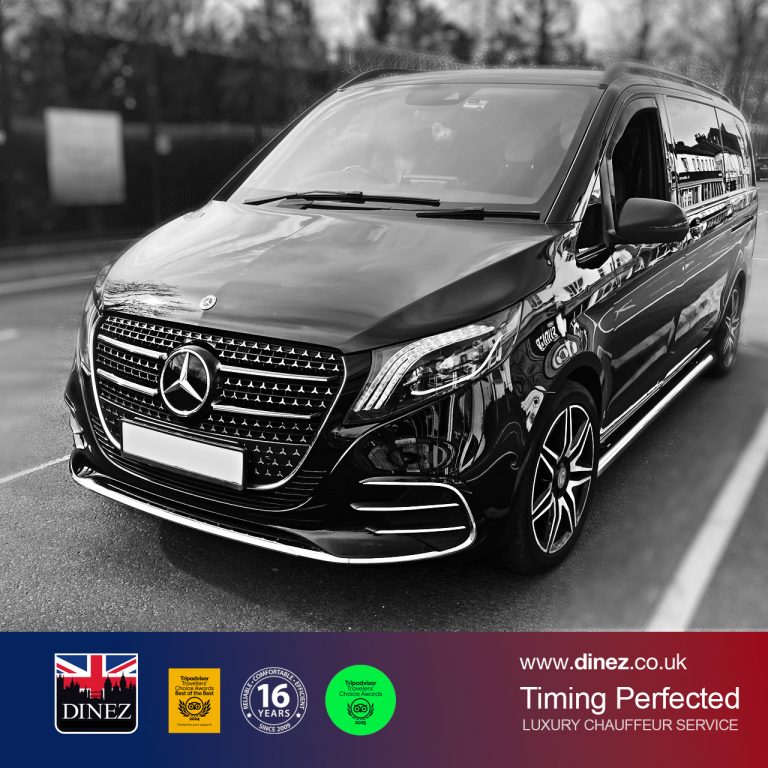
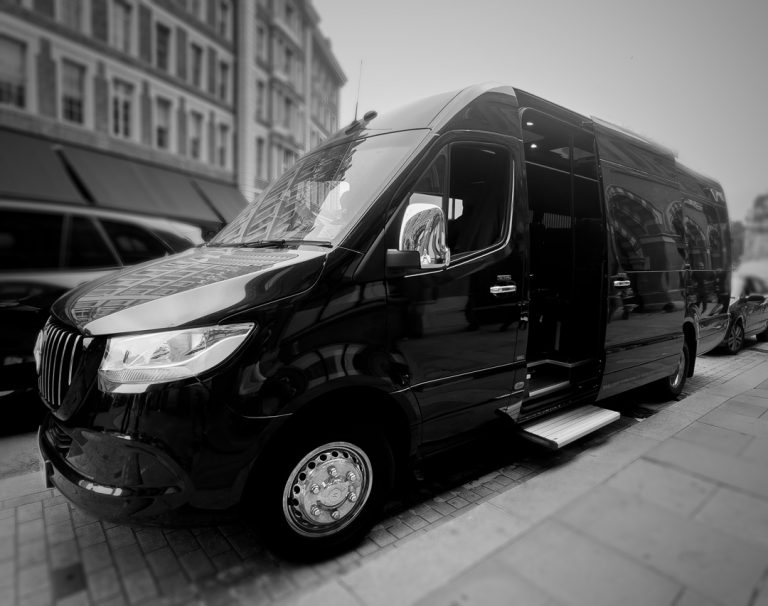
Three things changed materially over sixteen years. The fleet expanded — from one Mercedes E-Class in 2009 to the current E/S/V class structure with Vito and Sprinter Jet for edge cases. The technology layer was added — live flight tracking moved from a phone call to dispatch in 2013, then to an automated feed in 2018; the booking form moved online in 2014. And the airport protocols changed, because the airports themselves changed — Heathrow’s forecourt charge in 2021 fundamentally re-engineered the meet-and-greet, and we adjusted within a fortnight.
Most things did not change. The written rules. The recruitment screening (still primarily for behavioural fit, not driving skill). The named-driver discipline. The default-silence conversational protocol. The 24/7 live human dispatch. The fixed-fare commitment. The same customer who used us in 2010 and uses us today gets, in operational terms, a near-identical service — an updated vehicle and a marginally faster booking interface, but the core product is unchanged.
Why Mercedes, specifically
Three reasons. Reliability data. Across the fleet life I have run them, Mercedes saloons have produced the lowest off-the-road incident rate of any premium European saloon I have considered (BMW, Audi, Jaguar, Lexus, Volvo). For a chauffeur operation, every off-the-road event is a customer failure; the vehicle that fails least is the vehicle the operating discipline can be built on top of. Brand recognition. The Mercedes star at the FBO door, the Mayfair hotel, the chalet at FIA, is read instantly by everyone who needs to read it. The vehicle is part of the protocol. Driver familiarity. Once a chauffeur has driven Mercedes for two years, they know the cars; their reflexes are calibrated; the vehicle behaves predictably. Mixing brands across a fleet introduces operational variance we cannot afford.
The team — recruiting for behaviour, not driving
For every twelve chauffeur applications, we typically progress one. We screen for behavioural fit before driving skill — composure under silence, punctuality at the interview itself, treatment of the receptionist, response to deliberate ambiguity. The driving assessment happens last, on the actual M3/M25 corridor, not on a closed track. We have parted ways with chauffeurs over single behavioural breaches (a photograph of a vehicle posted to a personal social media account; a comment about a principal in a casual conversation overheard by a passing journalist). The rules are the rules. The discipline is the product.
Accountability — why I write under my own name
I write every article on the Dinez Journal under my own name because trust in this category is built on identifiable people, not anonymous brands. If you cite a piece, the named author is me. If you have a complaint, my name is on the door. If a driver fails the standard, I am the person who is accountable for the recruitment screen that let them through.
This is not a marketing position. It is the only operating model in private-hire I think is honest. The category is full of brands that do not have a person behind them — and the absence is felt, in the quiet way that absence usually is.
The Dinez Journal — what this editorial series is
The Dinez Journal is the long-form editorial series I write under my own name on this site. It exists because the chauffeur trade is full of marketing copy and short of writing — there are very few honest, considered pieces about what executive private hire actually involves, written by people who run the operation. I write the Journal to fill that gap and, in passing, to make this company easier to understand without a sales call.
Topics covered to date: airport transfer protocols, vehicle class selection, the chauffeur vs taxi vs Uber comparison, private aviation ground transfers, corporate account structure, cruise transfer timing, London evening event logistics, the Farnborough Airshow operating week, and the operating discipline behind all of it. The series will extend over the next twelve months with deeper writing on each.
The next decade — what we are working on next
Three working priorities for the next decade. One. Electric and hybrid Mercedes integration as the EQ range matures — currently EQS and EQE are joining trial routes and we expect 30 percent of the fleet to be EV by 2028. Two. Deeper FBO and private aviation coordination — Farnborough Airport’s expansion plans suggest doubled traffic by 2030, and the chauffeur operation that is embedded in the FBO protocol now is the one that will be the default in 2030. Three. The Dinez Journal as a long-running editorial record of operating discipline in the trade — read by other operators, by journalists writing about the category, and by passengers who want to know who they are booking from.
Reach me directly
I am reachable directly on the booking line (01252 265051), via WhatsApp (+44 7778 356571), and through the verified author profile at gravatar.com/dineztaxis. The phone is answered by a member of the team during business hours; outside hours it is forwarded to the on-call dispatcher. For complaints, editorial questions, or anything that needs me personally, the email through the contact form is the most reliable route. Read more about the company on the founder page.
About Dinez Carnay & the company — your questions, answered
When was Dinez Taxis and Airport Transfers founded?
Dinez Taxis and Airport Transfers was founded in Farnborough, Hampshire in 2009 by Dinez “Dino” Carnay. The company has been continuously operating for sixteen years as of 2025 and has held the TripAdvisor Travellers’ Choice award in seven separate years between 2017 and 2025.
Why does the company use only Mercedes vehicles?
Three reasons: lowest off-the-road incident rate among premium European saloons across the fleet life run; instant brand recognition at FBOs, premium hotels and corporate venues; and driver-familiarity benefits from running a single vehicle brand. The Mercedes choice is operational, not cosmetic.
Who writes the articles on the Dinez Journal?
Dinez “Dino” Carnay, the founder, writes every article on the Dinez Journal under his own name. The editorial position is that trust in this category is built on identifiable people, not anonymous brands — so authorship is verifiable through the rel=”me” Gravatar profile and named in every article byline.
What is the company’s recruitment screen for chauffeurs?
For every twelve applications, typically one is progressed. The screen is behavioural fit first (composure in silence, punctuality at the interview, treatment of receptionists, response to ambiguity), driving skill second. Driving assessment happens on the live M3/M25 corridor, not on a closed track.
What is the most important rule the company operates by?
Every operating rule is written down and visible to every dispatcher and chauffeur. The discipline of written rules — rather than memory or culture — is what allows the operation to be audited, to scale beyond the founder, and to survive personnel changes. The original rules from 2009 are still on the dispatch office wall in the same handwriting.
Is the founder reachable directly?
Yes. Dinez is reachable on the booking line (01252 265051), WhatsApp (+44 7778 356571), and through the verified Gravatar profile at gravatar.com/dineztaxis. For editorial or complaint matters that need the founder personally, the contact form is the most reliable route.
What is the company working on for the next decade?
Three priorities: electric and hybrid Mercedes (EQ range) integration with a target of 30 percent EV fleet by 2028; deeper FBO and private aviation coordination as Farnborough Airport doubles traffic by 2030; and the Dinez Journal as a long-running editorial record of operating discipline in the chauffeur trade.
- Tripadvisor Travellers’ Choice 2020, 2023 & 2026
- 525 verified Google reviews
- Established 2009 · 16 years on the Hampshire circuit
- Mercedes E · S · V Class fleet